AI Mood-Driven Navigation System for Netflix
ROLE
PRODUCT DESIGNER
TIMELINE
6 WEEKS
TEAM
4 DESIGNERS
TYPE
CONCEPTUAL PROJECT
OVERVIEW
Research shows that 66% of streaming viewers know exactly what they want to watch when they open the app. The other 34% spend a long time browsing. Only 26% of users watch content based on platform recommendations.
USER INTERVIEW
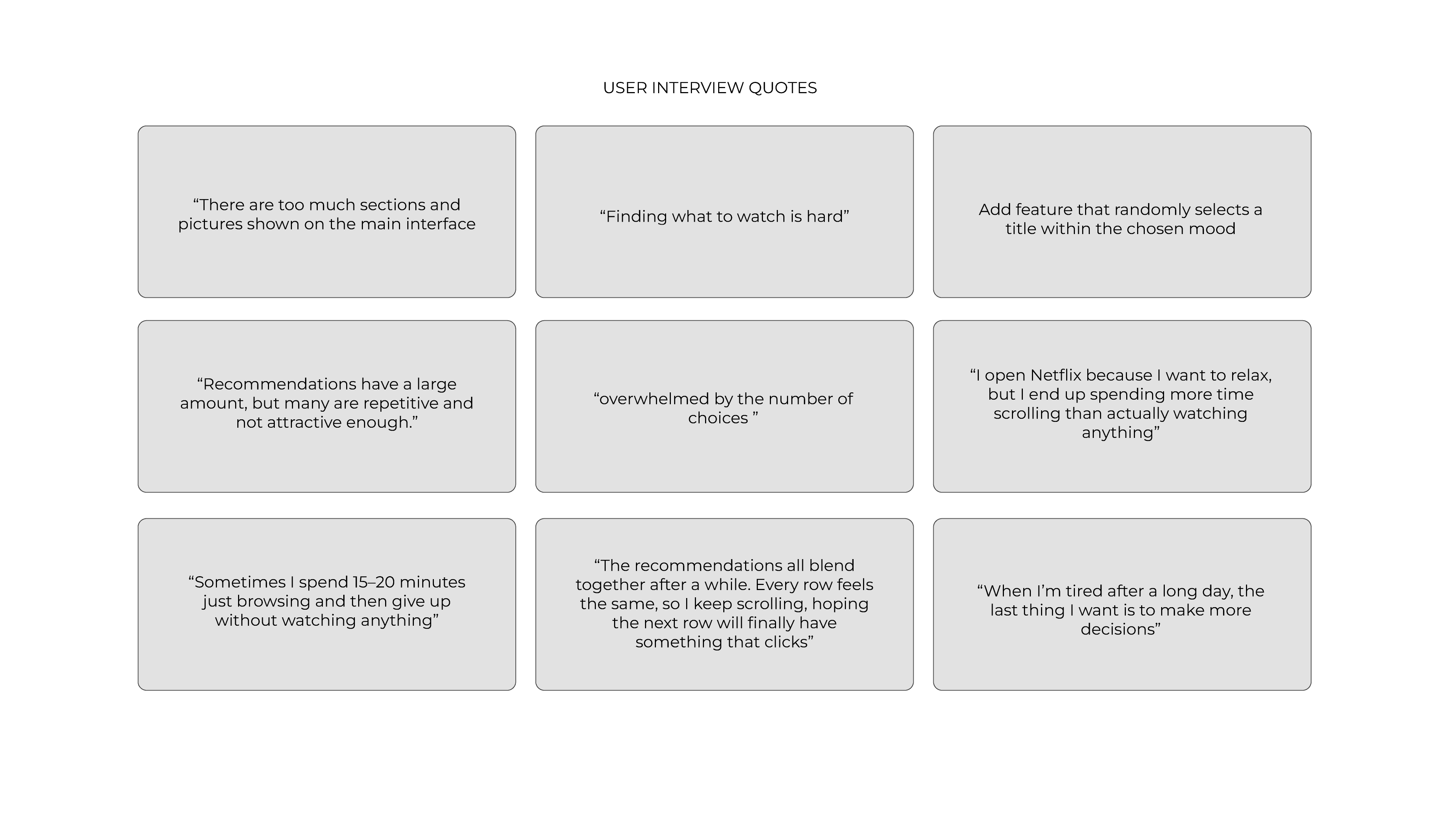
We conducted 15+ interviews with college students aged 18-22 years old.
The three primary barriers these users face include:
• Cognitive load: Limited browsing time increases stress when faced with endless options
• Fear of wrong choice: Users worry about wasting time on unsatisfying content
• Decision deferral: Content overload leads users to postpone choosing
DESIGN SPRINT
After testing a wide range of directions, the team ultimately selected the mood‑driven navigation concept that I proposed as the core solution
INFORMATION ARCHITECTURE
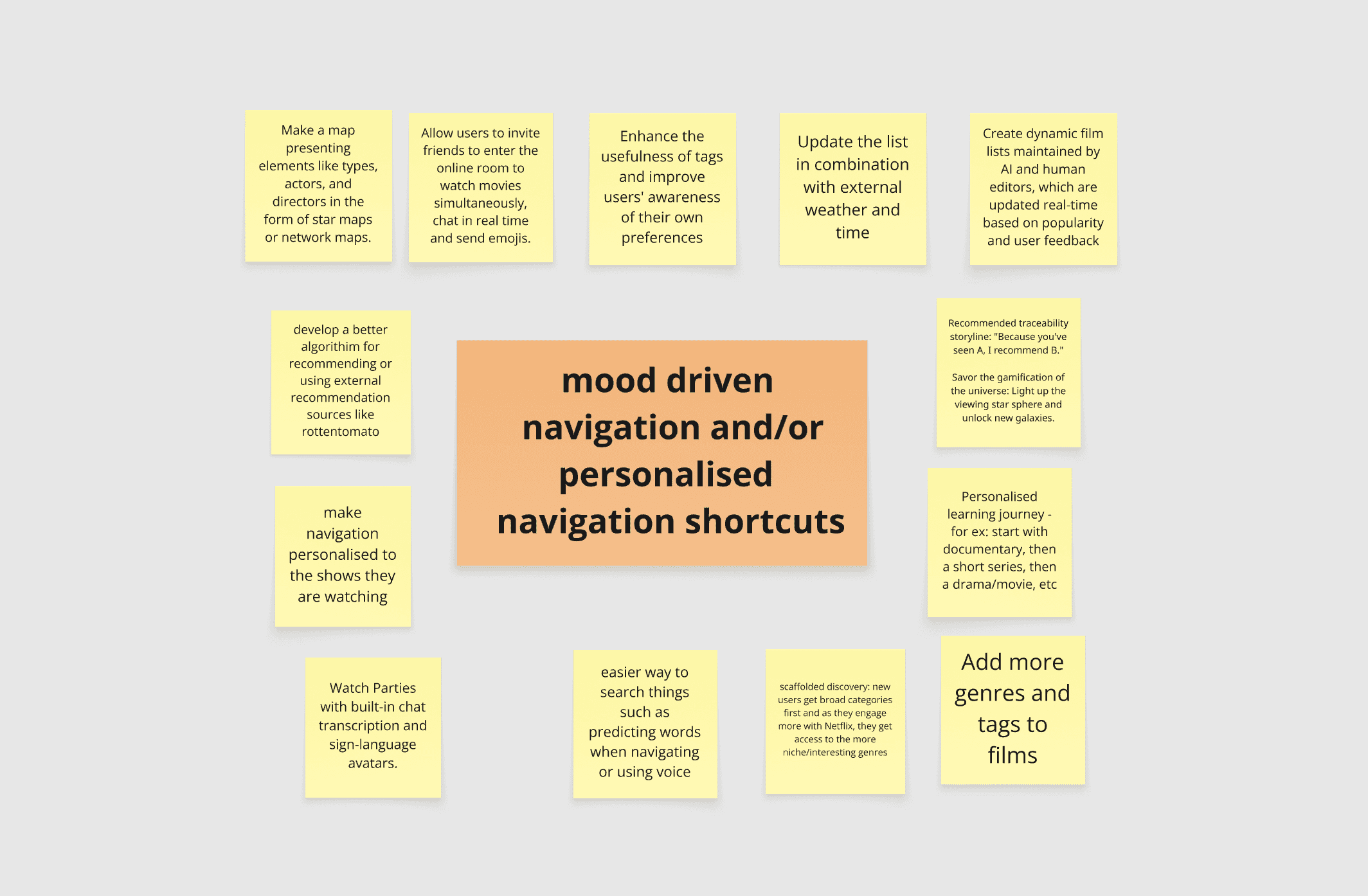
Our team explored multiple navigation structures through collaborative brainstorming and comparative analysis, mapping how mood-driven discovery could integrate seamlessly into Netflix's existing ecosystem while reducing decision fatigue
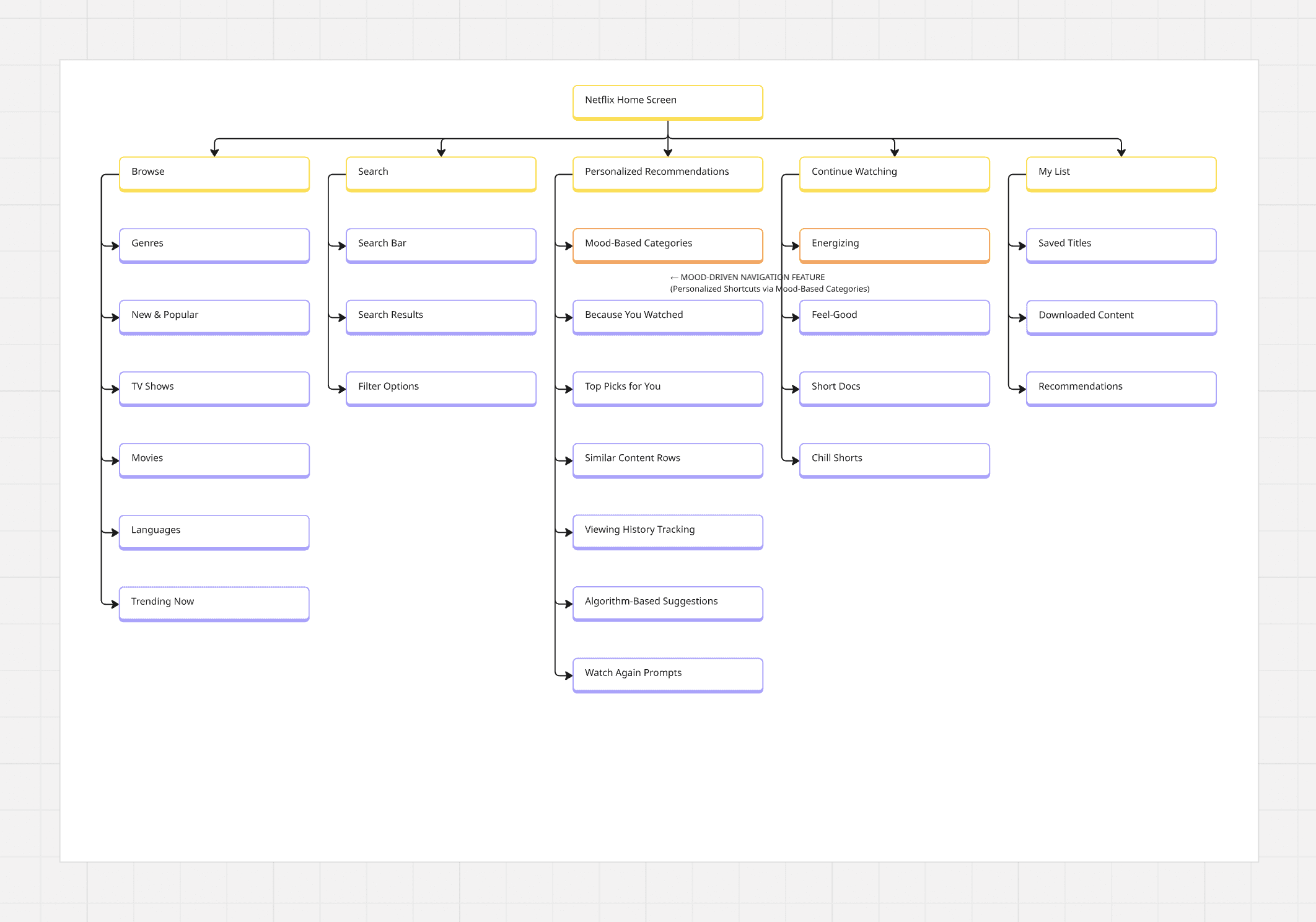
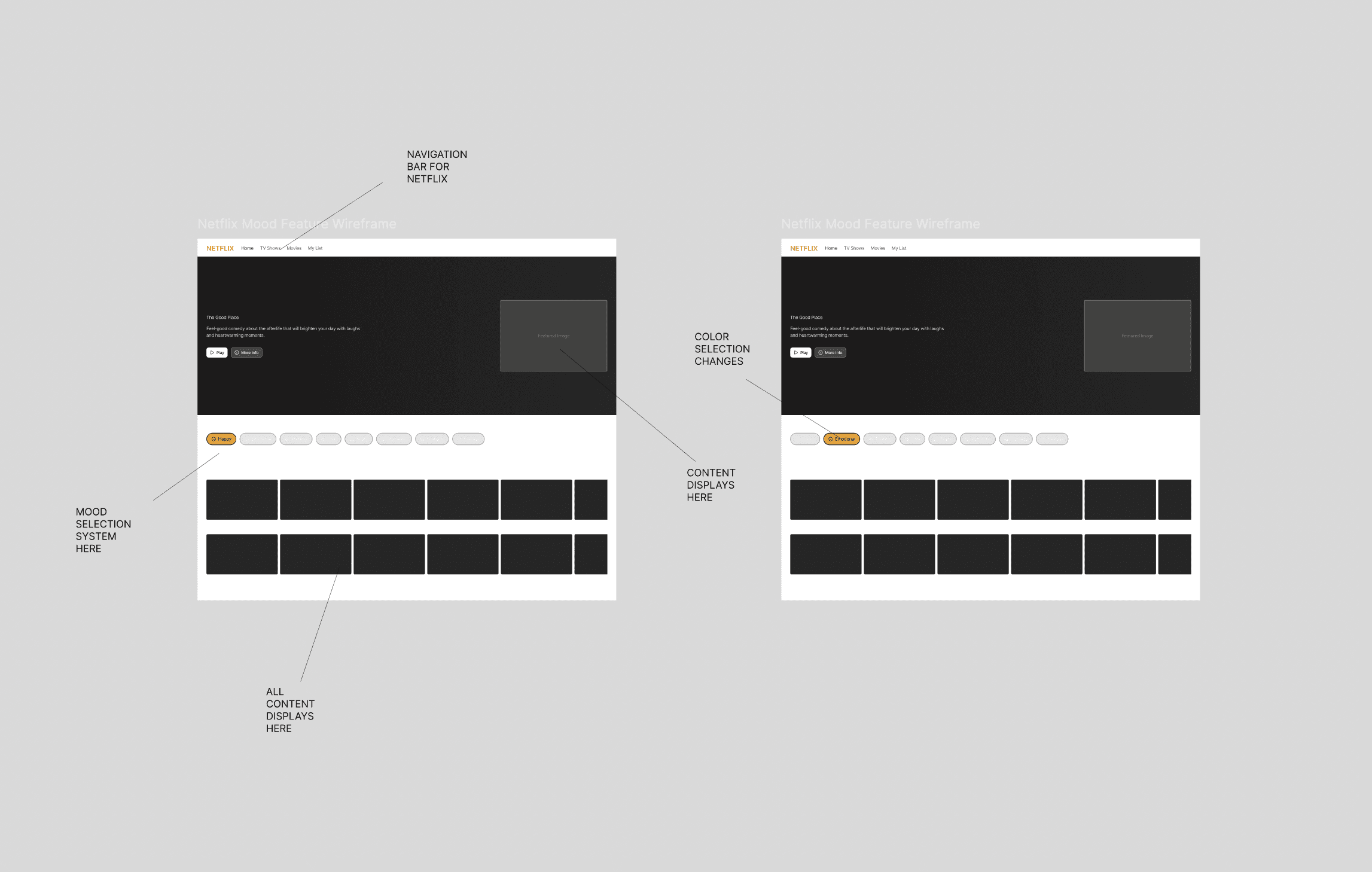
Using the Information Architecture, we developed various wireframes of the mood-based navigation system and the one I designed was chosen for further prototyping.
IDEATION
Based of the chosen wireframe, we decided to build a working prototype:

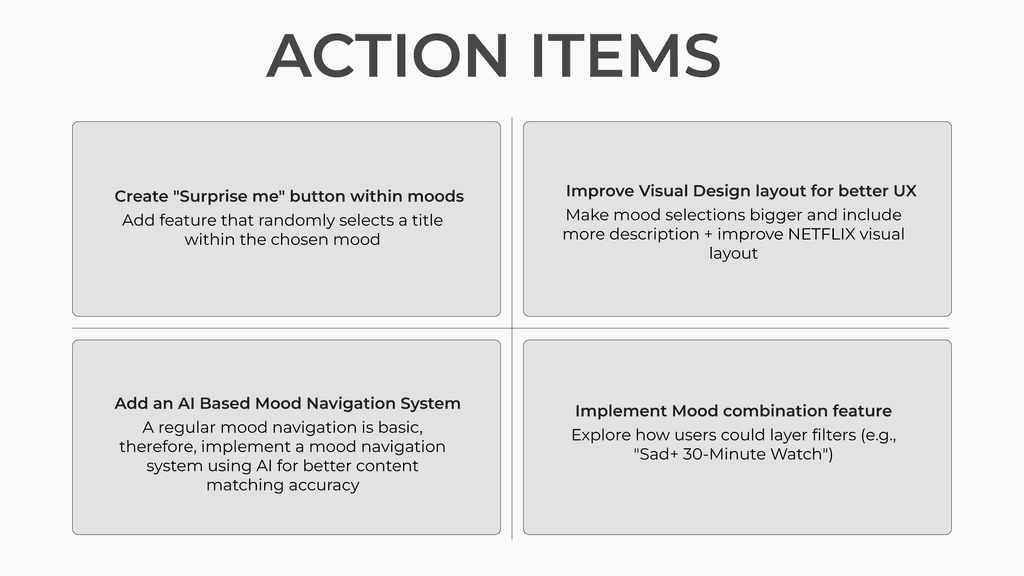
After 10 usability sessions and AI-assisted analysis, we uncovered clear pain points and defined concrete next steps to improve key flows and content clarity.
SOLUTION
Tell Aura how you feel, and it turns your emotions into something to watch.
Users can choose moods that match how they feel in the moment, and either layer multiple moods together or focus on just one, with each selection instantly reshaping the rows into content tailored to that emotional state.
Alongside manual mood selection, a “Surprise me” option lets viewers randomly generate and layer moods with one tap, creating unexpected combinations that instantly reshuffle the rows into fresh, mood-aligned recommendations without any extra decision-making.
When viewers hover near the Find your mood area, Aura softly appears and trails their cursor, inviting them into a dedicated mood input space. From there, they can type exactly how they feel, and Aura translates that emotion into a curated set of titles, each labeled with a percentage match that shows how closely it aligns with their current mood.
REFLECTION
During this 6-week project, I worked with three other designers and learned how to combine different viewpoints into one clear vision.
If I had more time, I would…
Test the concept with real viewers: I’d run more usability sessions with a wider range of users to see how Aura works in everyday situations, like when someone is tired but still wants to watch something.
Explore a voice-first flow: I’d prototype a voice interaction where Netflix can gently ask how you feel and follow up with a few questions, then turn that short conversation into a personalized mood profile and recommendations.
What I learned…
Emotion is hard to design for: Creating a mood-based experience taught me how important it is to handle feelings carefully so the system feels supportive and intuitive, not gimmicky or overwhelming.
NEXT
NOVA